A new organisational paradigm
Organisations that change shape — and keep their soul.
Polymorphic Organisations: the best of every model, not a mediocre compromise.
The lineage
Every era rewrites what an organisation is.
1911
Taylor
Efficiency
Scientific Management: the organisation as a machine.
1950s
Deming
Quality
The organisation as a system.
1981
Welch
Performance
The organisation as a value engine.
2014
Laloux
Autonomy
The organisation as a living system; self-management and Teal.
Now
Polymorphic
Adaptability
The organisation that changes form, logic and leadership energy to fit the work, with a human soul.
Where this came from
For over 20 years I've been researching progressive organisational operating systems, models and design. I came to learn — and believe — that self-managed, teal organisations would be the future.
But that future hasn't taken hold. Why not? Because the system feels self-management isn't always appropriate, and so orthodoxy hangs on.
And yet, as traditional ways of working and doing business are constantly torn up, the system is hiding its own fragility — and perhaps its intent — because it hasn't got something new enough to step into.
Enter Polymorphic Organisations — the best of everything, not some mediocre compromise.
Perry Timms, Founder & Chief Energy Officer, PTHR
“A Polymorphic Organisation is an enterprise designed to change form, logic, and leadership energy in response to varying work demands, blending traditional and emergent structures constantly and deliberately.”
“We need organizations that are not machines but living systems.” — Frederic Laloux
“Polymorphism lets you program in the present, with an eye to the future.” — Peter J. Denning
Act 1
Why change shape
They worked brilliantly — for factories, war efforts and mass markets. But work is different now.
“The only constant is change.”
We need organisations that don't stay in shape — they change shape intentionally.
The Industrial Inheritance
- 01Fixed departments working in silos
- 02Top-down command
- 03Standardised jobs
- 04Linear growth logic
“We've spent centuries learning how to control people. Now we need to learn how to let them go.”
Today's conditions require new forms
- 01Teams are distributed
- 02Technology is modular
- 03Challenges are interdisciplinary
- 04Learning is continuous
- 05Purpose is personal
“A truly profound and different insight is that you can design systems to be adaptive.”
Honouring OD
Lewin, Senge (the Learning Organisation's five disciplines), Burke-Litwin and Kotter shaped how we support change. But even cherished models rest on linear logic — unfreeze, change, refreeze. We need more adaptive metaphors.
Act 2
What it is
It doesn't operate from one dominant model; it blends.
- 01Divisions — where regulation or safety demands clarity
- 02Spaces — for innovation, insight and inclusion
- 03Stacks — to mobilise talent across boundaries
- 04Flywheels — to track performance and progress through purpose
- 05Leadership Energies — that shift between optimisation, innovation and belonging
Purpose stays constant; form changes freely.
“Manage the interactions of the parts, not the parts separately.”
So when do you use which?
- The work
- The form
- Regulated ops, infrastructure
- Divisional / functional
- Innovation, co-creation
- Spaces, self-managed teams
- Talent deployment
- Proficiency Stacks
- Learning, transformation
- Flywheels + Mosaics
- Culture, inclusion, connection
- Belonging Spaces
“There is no one best way to do anything. What is right is what the situation requires.”
The shift at a glance
- 01Running two organisations at once — Legacy and Future
- 02From divisional to space-based
- 03From balance sheets and KPIs to true effectiveness and value creation
- 04From job descriptions to Proficiency Stacks
- 05Leaders from heroes to Incubators and Activators
Borrowed from code: object-oriented design
- Objects
- People, teams, squads
- Classes
- Patterns and archetypes of work
- Messages
- Invitations to act and connect
- Abstraction
- Interface over identity
- Encapsulation
- Self-contained teams with purpose
- Inheritance
- Evolution of capability, not just promotion
- Polymorphism
- One purpose, many expressions
Act 3
The Polymorphic Operating Model
Six layers, working as one. Select a layer to explore it.
Value seen through six lenses of prosperity, with flourishing as the ultimate outcome.
Layer 01
Purpose
Value seen through six lenses of prosperity, with flourishing as the ultimate outcome.

Act 4
Organisational Oscillation
OD becomes OO: design, development and the oft-forgotten effectiveness now oscillate together.
Expansion
Creativity, emergence, innovation
Consolidation
Alignment, reflection, integration
Evolution
The oscillating combination of both
Where OD sees a plan, OO feels a pulse. Where OD sees a change programme, OO crafts a version release.
Running Legacy and Future organisations at the same time, held together by HR 3.0.
The balance to hold
- Core quality
- Adaptability & Fluidity
- Pitfall
- Diffusion & Ambiguity
- Challenge
- Coherence & Discipline
- Allergy
- Rigidity & Domination
Not command, not chaos.
Act 5
AI as accelerant
AI flattens the field and makes learning the currency.
AI doesn't remove the need for human organisation. It demands that we organise ourselves differently.
AI flattens the field, removes junior roles, makes learning the currency, brings agentic AI and widens the leadership gap.
- The shift
- The Polymorphic answer
- AI flattens performance
- Stacks elevate contribution beyond routine
- Junior roles disappear
- Spaces create new routes to learn and contribute
- Learning becomes the currency
- Flywheels make learning the rhythm of work
- Agentic AI joins the team
- Encapsulated teams with clear purpose orchestrate humans and agents
- Shortage of capable line managers
- Leadership that is decentralised, energetic and triadic

Act 6
Getting there
We don't need to abandon structure. We need to transcend it.
Year 1
6.25%
Year 2
12.5%
Year 3
25%
Year 4
50%
Year 5
100%
A paced transition — which may be accelerated.
The Polymorphic Organisation isn't stasis, nor is it chaos. It's intentional responsiveness.
- 01What work in your world needs clarity?
- 02What work needs flexibility?
- 03How will you shape-shift accordingly?
Writing
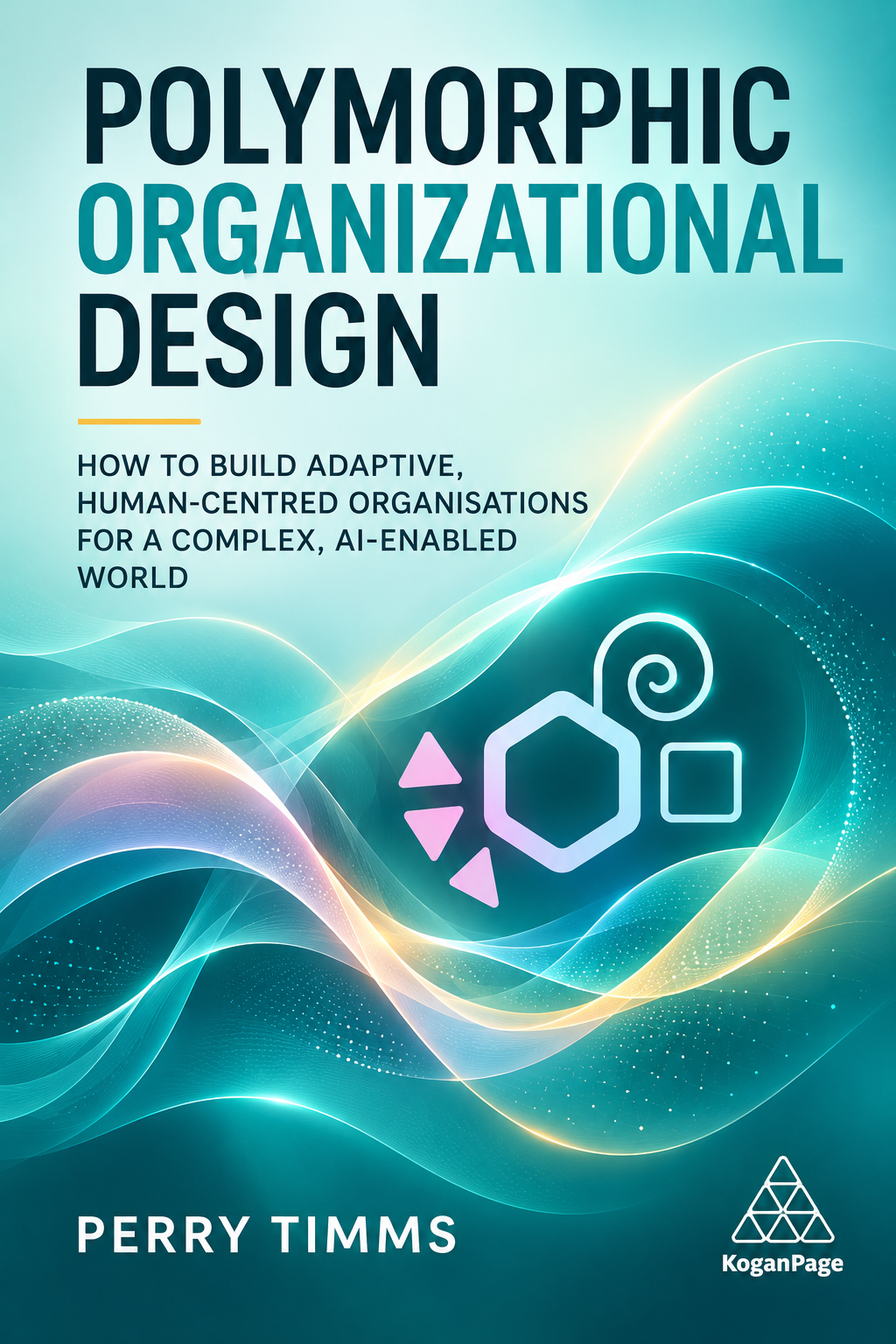
Coming in January 2028 - Polymorphic Organisations - the book.
The Polymorphic Chronicles
An ongoing series of articles exploring the concept and actuality of Polymorphic Organisations.
Explore Writing →LISTEN & WATCH
Hear the idea in conversation
Perry Timms on Polymorphic Organisations, across podcasts and stages.
“Eudaimonia is an activity of soul in accordance with excellence in a complete life.”
How will you become Polymorphic?
THE COLLECTIVE
The people shaping the idea
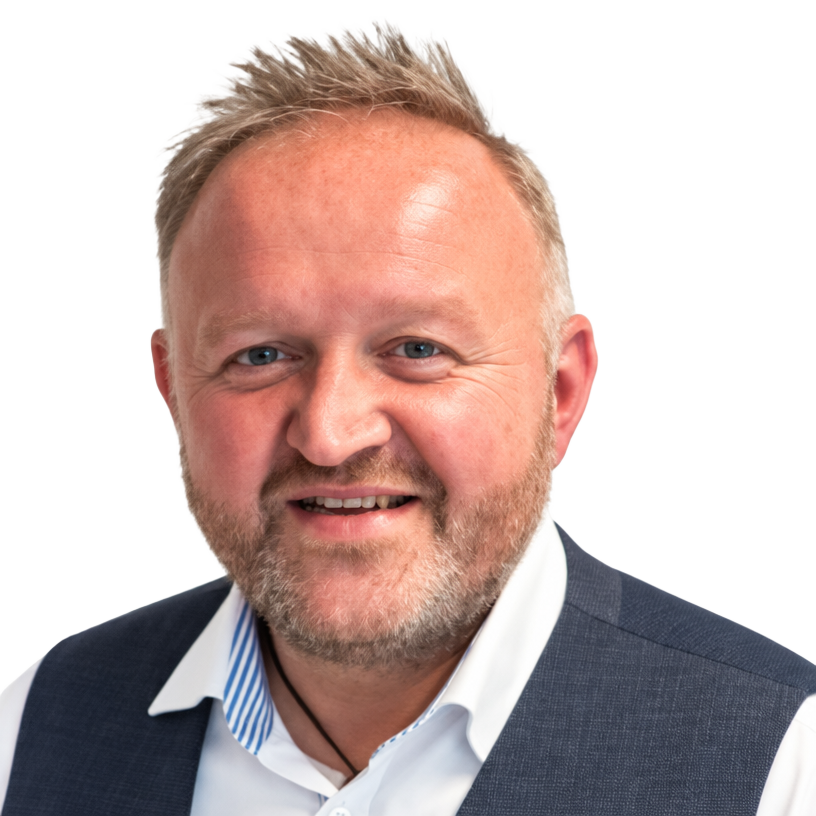
Perry Timms
Founder & Chief Energy Officer, PTHR. Originator of Polymorphic Organisations.
Perry has been in the “future of work” space for over a decade and much of his work has been on research, synthesis and designing more future-ready organisations.
After 20 years of exploring and experimenting with “next stage” systems of operating for enterprises, in mid 2025, Perry started to converge his thinking from being anti-hierarchical, pro self-managed organisation into something that combines those and more. In looking into ways to express this he came across the concept of polymorphism in Object Oriented Design.
150,000 written words, hundreds of hours of keynotes and podcasts and endless thinking and sketching, he’s now the voice and curator of the Polymorphic Organisation paradigm shift.
His forthcoming book, Polymorphic Organizational Design, is with Kogan Page and publishes in January 2028. The writing of that is already underway.
Katy Stanley
Chief Operating Officer, PTHR
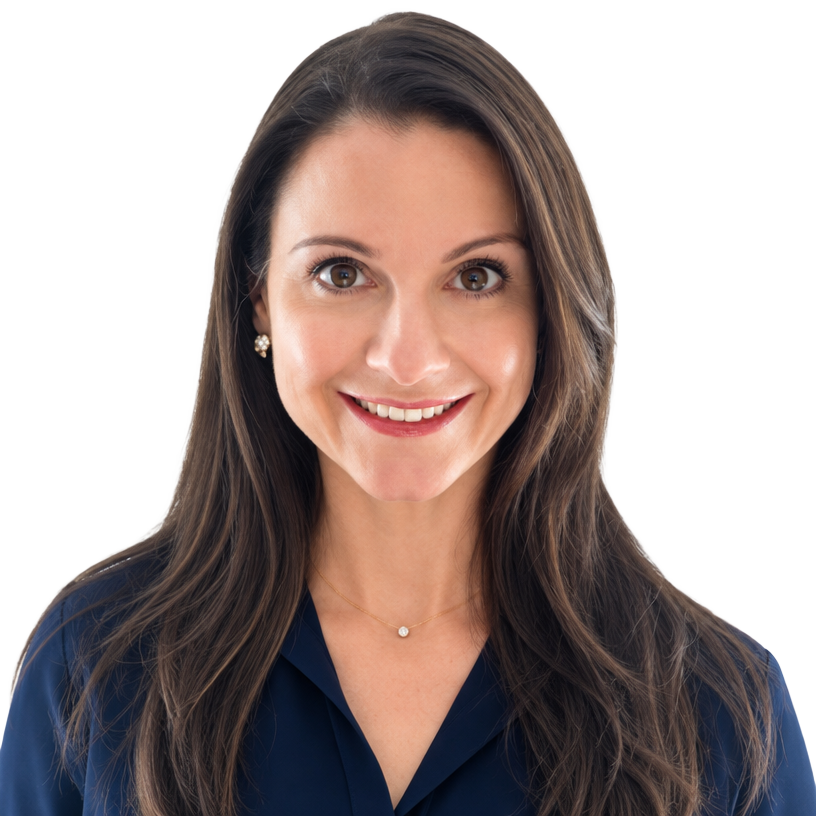
Katy runs PTHR’s operations and studio, bringing experience across HR management, recruitment, internal communications, culture transformation, change, CSR, employee engagement, people development and mentoring. She is the creator of Alchemy of Change, PTHR’s experimental card-based tool for sparking fresh thinking about organisational development and change. Katy is an Associate Member of the CIPD and a Fellow of the RSA.
Kirsten Buck
Chief Futures Officer, PTHR
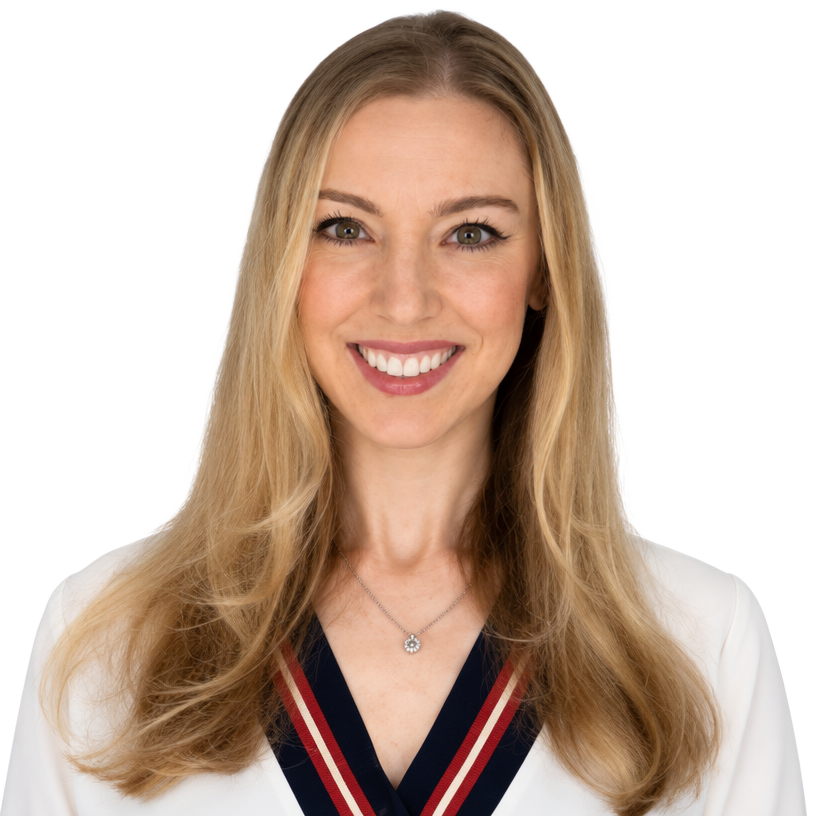
Kirsten leads PTHR’s strategic focus on how its work shapes clients and the discipline, while advancing its commitment to sustainable business. She helps founders and HR leaders build organisations where people, performance and planet are the strategy, not competing priorities, through progressive organisation design, autonomous ways of working and ESG advisory. A B Lab-trained B Corp™ Consultant, she co-writes with Perry on self-management and on connecting employee and customer experience.